
Concrete pricing is one of the first questions both contractors and homeowners ask when planning a project. Whether you’re pouring a driveway, foundation, slab, or commercial pad, knowing the concrete price per yard helps you plan your budget with confidence and avoid unexpected costs.
In Canada, concrete is sold by the cubic yard, and pricing can vary depending on several factors such as mix design, delivery distance, job size, and seasonal conditions. Because of these variables, the final cost per yard is rarely a one-size-fits-all number.
In this guide, we break down the average concrete cost per yard in Canada, explain what affects pricing, and show you how to get the most accurate ready-mix concrete quote from MRM—so you can plan your project with clarity and confidence.
What Is the Average Concrete Price Per Yard?
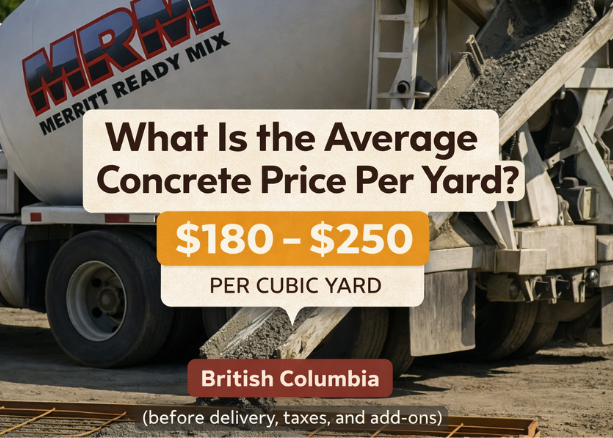
In British Columbia, the average concrete price per yard typically falls within the following range:
$180 – $250 per cubic yard (before delivery, taxes, and add-ons)
This price usually applies to standard ready-mix concrete used for residential and light commercial projects. However, the final cost can change based on mix strength, delivery distance, order volume, and site conditions.
For Merritt and surrounding Interior BC areas, pricing may vary slightly depending on travel time, fuel costs, and the specific requirements of your project. Smaller loads or specialty mixes may cost more per yard than standard pours.
💡 Important: Concrete is sold by the cubic yard, not by square footage.
Always calculate volume first to avoid under- or over-ordering.
What Affects the Concrete Price Per Yard?
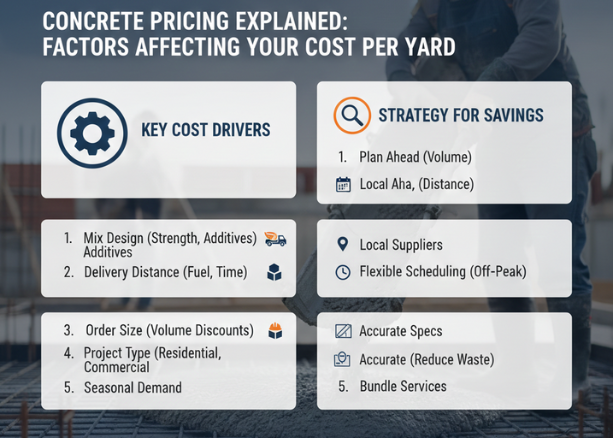
The concrete price per yard is not a fixed number. While average pricing can give you a general idea, the final cost often depends on several project-specific factors. Understanding what influences concrete pricing helps you compare quotes accurately and avoid unexpected charges.
Factors such as mix design, delivery distance, order size, and seasonal conditions all play a role in determining the price you pay. Even small differences in project requirements can lead to noticeable changes in cost per cubic yard.
Below, we break down the key elements that affect concrete pricing so you can better understand how quotes are calculated and make informed decisions when planning your project.
1. Mix Design
Different projects require different concrete strengths and performance characteristics. The mix design determines how strong, durable, and weather-resistant the concrete will be, which directly affects the price per yard.
Common mix types include:
- Standard residential mix – Used for sidewalks, patios, and light slabs
- High-strength structural mix – Required for foundations, footings, and load-bearing structures
- Air-entrained concrete – Designed for freeze-thaw protection in colder climates
Stronger or specialized mixes require more cement, additives, and precise batching, which increases production costs. As a result, these mixes typically cost more per cubic yard than standard concrete.
2. Delivery Distance
Delivery distance plays a major role in the final concrete price per yard. Concrete must be delivered within a limited time window, so fuel costs, travel time, and truck availability all factor into pricing.
Jobs located farther from the plant, in rural areas, or with difficult site access may require longer haul times or additional coordination. These conditions can increase delivery costs and affect the overall price per cubic yard.
Limited access, steep driveways, or restricted unloading areas may also add time on site, which can further impact pricing. Planning delivery logistics in advance helps avoid delays and unexpected charges.
3. Order Volume
Order volume has a direct impact on the concrete price per yard. Smaller concrete orders often cost more per yard because suppliers must account for minimum load charges, even when only a small amount of concrete is delivered.
Ready-mix trucks, batching, and delivery logistics involve fixed costs regardless of load size. When an order does not meet the minimum volume, those costs are spread across fewer cubic yards, increasing the price per yard.
Larger pours are generally more cost-effective, as delivery and production costs are distributed over a higher volume of concrete. Planning your project carefully and ordering the correct amount can help reduce overall costs.
4. Additives & Extras
Additives and specialty admixtures are often used to improve concrete performance under specific conditions. While they increase the concrete price per yard, they can be essential for achieving durability, strength, and proper curing.
Common add-ons include:
- Accelerators – Help concrete set faster during cold weather pours
- Retarders – Slow down setting time in hot weather to prevent cracking
- Fibers or waterproofing admixtures – Improve crack resistance and long-term durability
Each additive adds to the material cost, but they can prevent costly issues such as premature cracking, surface damage, or curing problems. Choosing the right extras for your project can save time and money in the long run.
Concrete Price Per Yard by Project Type
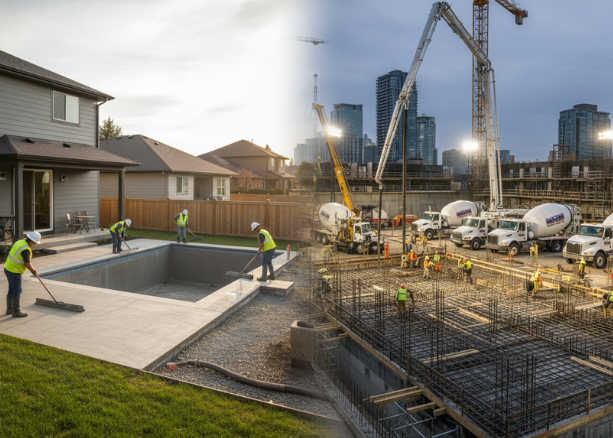
Concrete pricing varies depending on how the material is used. Different projects require different strengths, finishes, and delivery considerations, which directly affect the price per yard.
If you’re working with a local supplier, understanding ready mix concrete services in Merritt can help you plan more accurately.
Below is a general estimate based on common residential and commercial applications. These ranges provide a starting point for budgeting, but final pricing may vary depending on project size, location, and mix requirements.
| Project Type | Estimated Cost per Yard |
|---|---|
| Sidewalk / Pathway | $180 – $210 |
| Driveway | $190 – $230 |
| Slab-on-grade | $200 – $240 |
| Commercial / Structural | Custom pricing |
1.Sidewalks and Pathways
Sidewalks and pathways typically use standard residential concrete mixes. These projects often have lower strength requirements, making them one of the more affordable applications per cubic yard.
2.Driveways
Driveways require stronger concrete to handle vehicle loads and freeze-thaw cycles. This often increases the price per yard compared to basic flatwork, especially when air-entrained mixes are used.
3.Slab-on-Grade Projects
Slab-on-grade projects are commonly paired with materials from our aggregate supplier to ensure proper base preparation.
4.Commercial and Structural Projects
Commercial and structural concrete projects often involve custom mix designs, higher strength specifications, and detailed scheduling. Because of these variables, pricing is typically customized based on project scope and requirements.
💡 Note: These prices are estimates. Delivery distance, additives, and order volume can all impact the final cost per yard.
If you want to check the price more accurately, visit this link to calculate the amount of concrete that you need.
How Much Concrete Do You Need Per Yard?
Knowing how much concrete you need before placing an order helps prevent delays, extra costs, and wasted material. Because concrete is sold by cubic yards, calculating volume accurately is one of the most important steps when planning a project.
Small miscalculations can lead to under-ordering, which causes delays, or over-ordering, which increases costs unnecessarily. Factors such as slab thickness, site preparation, and uneven ground can all affect the total amount required.
Below, we explain how much area one cubic yard of concrete covers and provide a simple example to help you estimate the right amount for your project.
Coverage per Cubic Yard
One cubic yard of concrete typically covers:
- 81 square feet at 4 inches thick
- 54 square feet at 6 inches thick
This coverage applies to flat surfaces such as driveways, patios, sidewalks, and slabs.
Example Calculation
For example:
- A 20 × 20 ft driveway poured at 4 inches thick
→ requires approximately 4 cubic yards of concrete
Always consider adding a small buffer to account for uneven ground, formwork variations, or minor spillage.
💡 Tip: Ordering the correct amount of concrete helps reduce waste and avoid additional delivery charges.
If you’re unsure about your calculations, working with a local ready mix supplier can help ensure your order is accurate and suited to your project.
Concrete Price Per Yard vs Total Project Cost
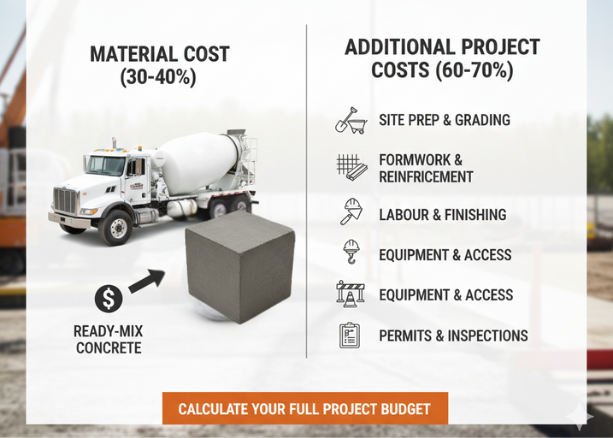
The concrete price per yard is only one part of your overall project budget. While material costs are important, the total project cost includes several additional factors that should be considered when planning your pour.
In most residential and commercial projects, the concrete itself typically represents about 30–40% of the total cost. The remaining budget goes toward preparation, labour, and finishing work that ensures the concrete performs properly and lasts long term.
When estimating your full project cost, be sure to account for the following:
- Site preparation and grading
- Formwork and reinforcement (rebar or wire mesh)
- Labour and finishing
- Equipment and access requirements
- Permits and inspections (if required)
Understanding the difference between material pricing and total project cost helps you plan more accurately and avoid unexpected expenses during construction.
Why Local Pricing Matters
Concrete pricing isn’t just about material costs—it’s also about local conditions and experience. Working with a local supplier means pricing that reflects real-world factors specific to your area, not generic regional averages.
Local suppliers understand:
- Interior BC climate conditions, including freeze–thaw cycles
- Seasonal temperature challenges that affect pouring and curing
- Regional building requirements and standards
- Efficient delivery routes, reducing delays and extra costs
Because of this local knowledge, pricing is often more accurate, scheduling is more reliable, and the concrete mix is better suited to the environment.
Working with a local provider like Merritt Ready Mix helps ensure dependable delivery, proper mix selection, and consistent quality—so your project stays on schedule and performs as expected.
How to Get an Accurate Concrete Price Per Yard
Getting an accurate concrete price per yard starts with providing clear project details. Because pricing depends on logistics, mix design, and timing, having the right information ready helps avoid delays and ensures your quote reflects the true cost of your project.
When requesting a quote, be prepared with:
- Project location – Affects delivery distance and scheduling
- Total cubic yards required – Helps avoid minimum load charges
- Application type – Driveway, slab, foundation, or commercial use
- Pour date – Ensures availability and proper planning
- Special mix requirements – Such as air entrainment or accelerators
Providing these details upfront allows suppliers to recommend the correct mix and schedule delivery efficiently.
📞 Tip: Calling ahead allows for better scheduling, clearer communication, and more accurate pricing—especially during busy construction seasons.
If you’re unsure about any of these details, a local concrete supplier can help you estimate quantities and select the right mix for your project.
Get a Concrete Quote
If you’re planning a residential, commercial, or municipal project, MRM provides reliable ready mix concrete tailored to Merritt and surrounding regions.
👉 Contact our team to get:
- Accurate pricing per yard
- Expert mix recommendations
- On-time delivery you can trust
FAQ
What is the concrete price per yard in Merritt, BC?
The concrete price per yard in Merritt, BC typically ranges from $180 to $250, depending on mix design, delivery distance, and order size.
What factors affect the concrete price per yard?
Pricing depends on concrete strength, additives, delivery distance, fuel costs, seasonal demand, and minimum load requirements.
Is delivery included in the concrete price per yard?
Delivery is usually priced separately and depends on distance, site access, and unloading time.
How many square feet does one yard of concrete cover?
One cubic yard covers about 81 square feet at 4 inches thick or 54 square feet at 6 inches thick.
How can I get an accurate concrete price per yard?
Provide your project location, cubic yards needed, pour date, and mix requirements to receive an accurate quote